
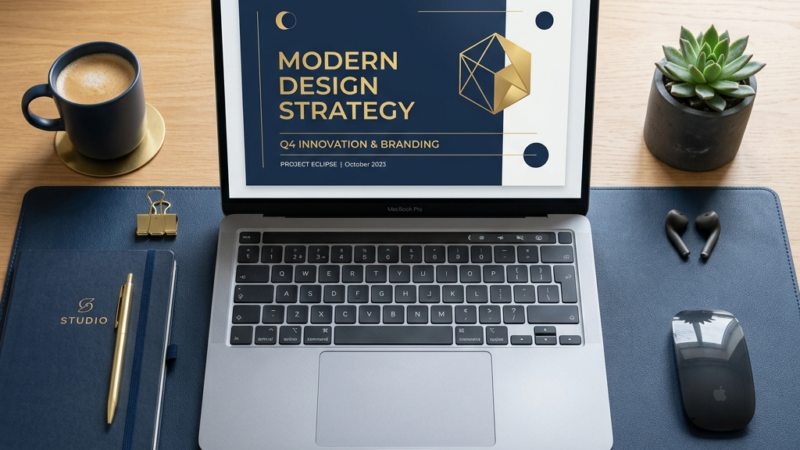
The Power of Negative Space
The single biggest mistake amateur presenters make is trying to fit every single word they plan to say onto the slide. This “Information Dumping” leads to cluttered, overwhelming layouts that force the audience to choose between reading the screen or listening to the speaker. Minimalist design is the practice of removing everything that isn’t absolutely essential, leaving only the “core” of your message to shine. It’s about clarity, authority, and professional confidence.
The Psychological Benefits of Whitespace
Negative space—the “empty” space on a slide—is just as important as the content itself. It gives the audience’s eyes a place to rest and allows them to focus on the most important information. A clean, minimalist slide suggests that you are in control of your data and that you have the confidence to focus on the one “key takeaway” rather than hiding behind a wall of text. Minimalism isn’t the absence of design; it is the presence of careful consideration.
Practical Tips for Shifting to Minimalism
- The One Idea Rule: Every slide should have exactly one main point. if you have two points, you need two slides. This keeps the narrative moving and prevents cognitive overload.
- High-Impact Imagery: Instead of five small, generic clip-art icons, use one high-quality, full-bleed photograph that evokes the emotion of your topic. A single powerful image is more memorable than a thousand bullet points.
- Typography that Breathes: Use large, legible fonts with plenty of line spacing. If people at the back of the room have to squint to read your data, you have failed as a visual communicator.
AI slidemakers are masters of visual balance. They use sophisticated grid systems to ensure your content has room to “breathe,” making your presentation feel premium, expensive, and modern. Minimalism isn’t just a design trend; it is a communication strategy that ensures your message is heard, understood, and remembered.